Affiliate disclosure: This post contains affiliate links. If you buy through them, I earn a small commission at no extra cost to you. I only recommend knives I’d actually put in my own kitchen.
Short answer: If you can only buy one, get a gyuto — an 8-inch (210mm) gyuto handles vegetables, meat, and fish. Choose a santoku instead if you cook mostly vegetables, work on a smaller cutting board, or want a shorter blade that’s easier to control.
The problem: two knives, one budget, no idea which one fits your hands
If you’ve spent any time researching Japanese knives, you’ve hit this wall: every “best of” list features both a santoku and a gyuto, often from the same brand, at similar prices, described in equally glowing terms. Nobody tells you which one to actually buy first. So you end up either guessing, buying both and wasting money on a knife you barely touch, or stalling the purchase entirely.
In my experience, this is one of the most common points where people abandon the whole idea of upgrading to a Japanese knife. The decision paralysis is real — and unnecessary once you understand what actually separates these two shapes.
Who this article is NOT for
- Someone who already owns one and is happy with it. If your santoku or gyuto is working fine, you don’t need to second-guess yourself into buying the other one too.
- Professional chefs with an established knife roll. You already know your preference from culinary training or years on the line — this beginner-to-intermediate comparison won’t tell you much new.
- Anyone shopping purely on price. If budget is your only filter, shape comparisons are secondary — go read our best Japanese chef knife under budget guide instead.
Selection criteria: how we compare them
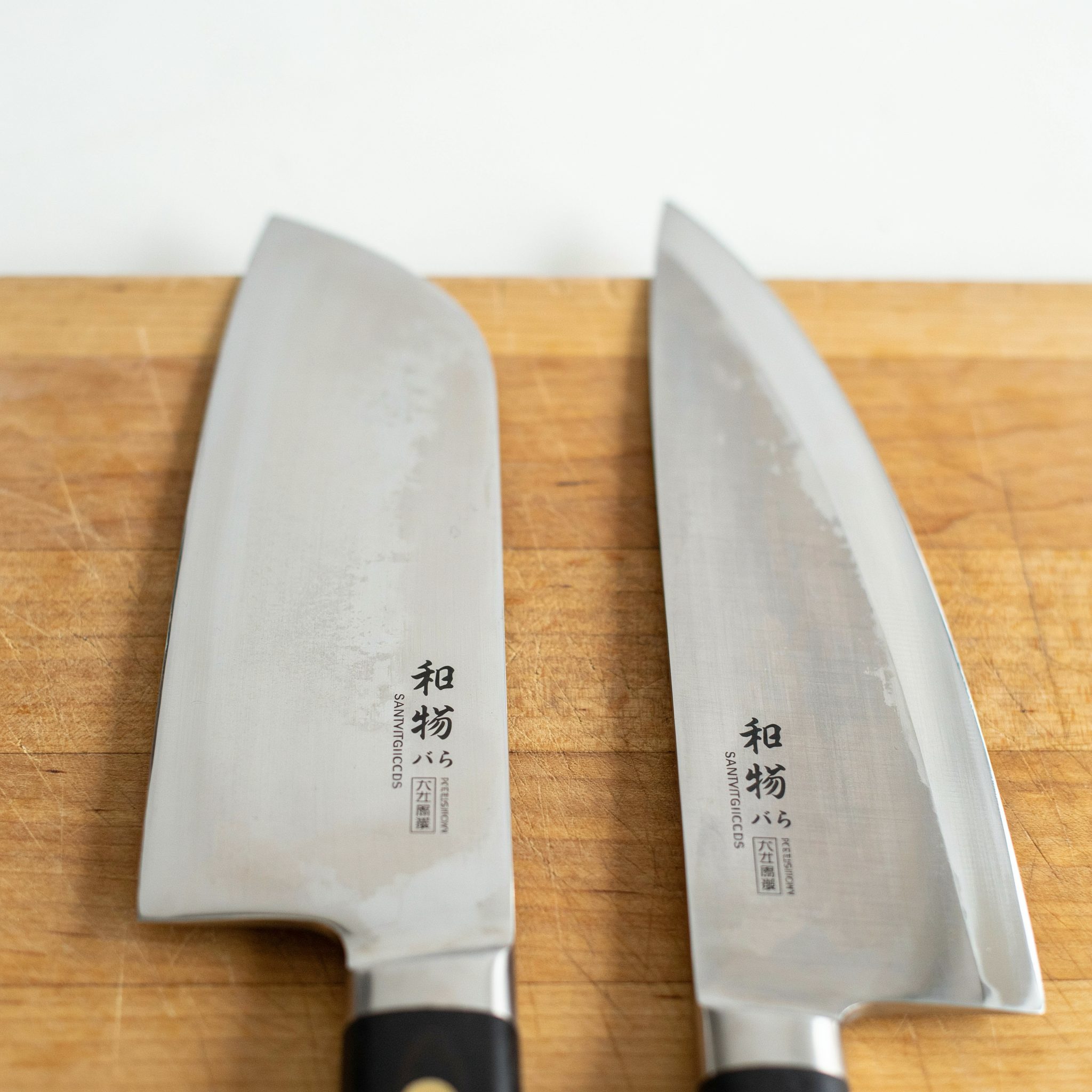
1. Cutting motion. This is the single biggest differentiator. A gyuto has a curved belly that tapers to a point, built for a rocking motion — tip stays roughly anchored while the heel lifts and falls. A santoku has a flatter edge and a rounded “sheepsfoot” tip, built for push-cutting — straight down, lift, move forward, repeat. If you learned to cook watching Western chefs, you almost certainly rock-cut without thinking about it, which points toward a gyuto.
2. Blade length and control. Santokus typically run 165–180mm; gyutos commonly run 210mm, sometimes up to 240mm for larger hands or bigger cuts of protein. Shorter blades feel more controllable to most beginners, especially on smaller cutting boards or in tighter kitchens.
3. Task range. Gyutos handle almost everything — vegetables, meat, fish, herbs — with the pointed tip useful for detail work like trimming fat or scoring. Santokus excel at vegetables and general chopping but feel slightly less natural for larger cuts of meat, where that tip would help.
Comparison table
| Santoku | Gyuto | |
|---|---|---|
| Cutting motion | Push-cut, straight down | Rock-cut, curved belly |
| Typical length | 165–180mm | 210–240mm |
| Tip shape | Rounded (sheepsfoot) | Pointed |
| Best for | Vegetables, everyday chopping | All-purpose, meat & fish detail work |
| Learning curve | Easier for beginners | Familiar if used to Western knives |
| Example (this niche) | Misono UX10 Santoku | Tojiro DP Gyuto |
Individual reviews
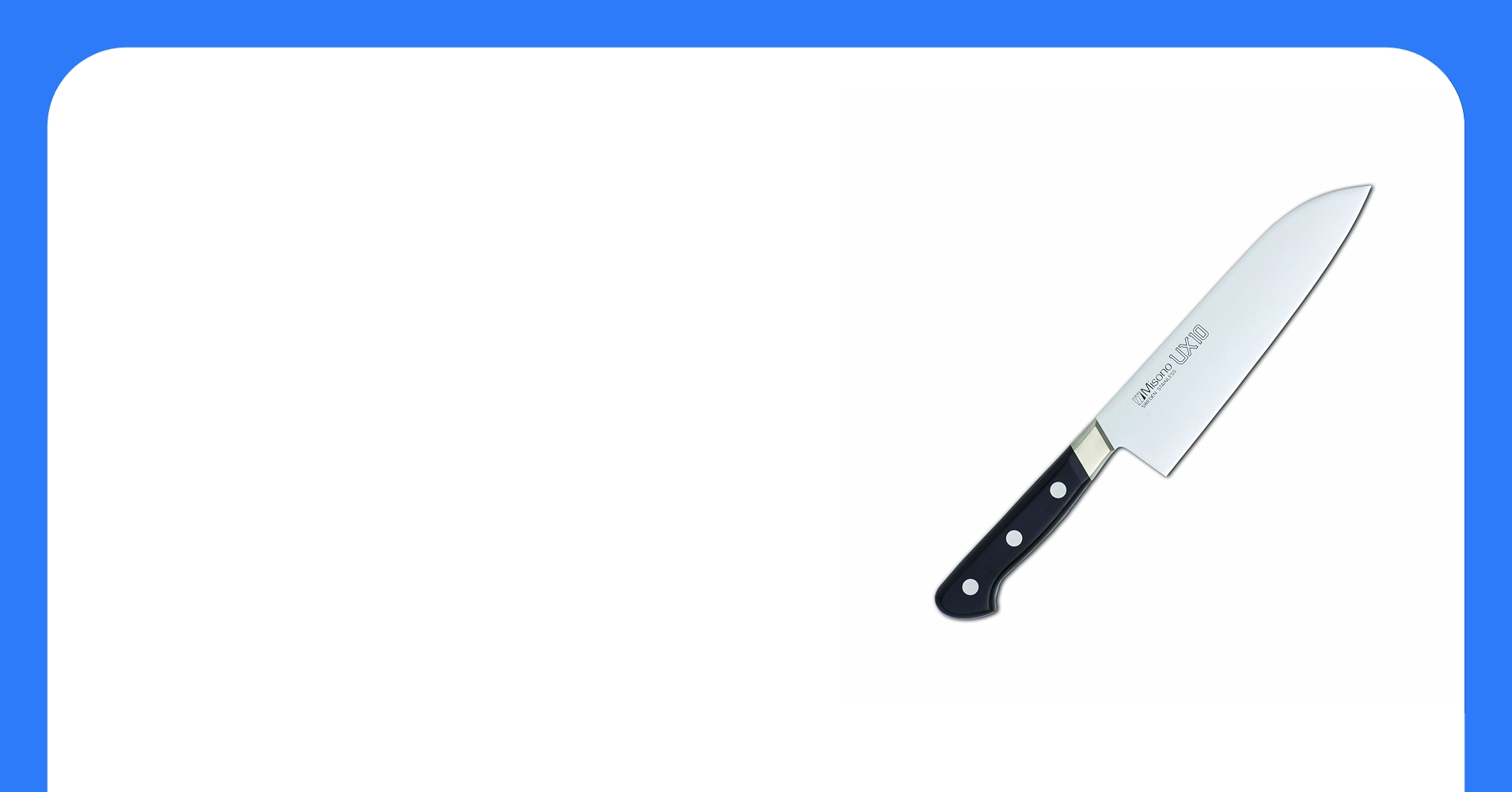
Misono UX10 Santoku — the santoku pick
In my experience handling the UX10, what stands out isn’t the shape itself but the blade geometry behind it — thin, precise grinding that makes push-cutting through dense vegetables like squash or celeriac require almost no downward force.
Pros:
- Excellent for vegetable-heavy prep, minimal resistance
- Compact size is easy to control for less experienced cooks
- Swedish stainless steel resists staining and corrosion well
Cons:
- Less natural for large cuts of meat or fish without a point
- Premium price for what some consider a “starter” shape
- Plain aesthetic compared to Damascus-finished alternatives

Tojiro DP Gyuto — the gyuto pick (value)
The Tojiro remains the most recommended entry gyuto for a reason: it does the rocking motion well, the tip is precise enough for detail trimming, and the VG10 core takes a genuinely sharp edge without a premium price tag.
Pros:
- Handles the widest range of ingredients of any knife on this list
- Excellent value for the steel quality
- Pointed tip useful for trimming, scoring, and detail work
Cons:
- Slightly longer blade takes more room and confidence to control
- Basic handle, no aesthetic flourish
- Thicker spine than premium gyutos, marginally less nimble


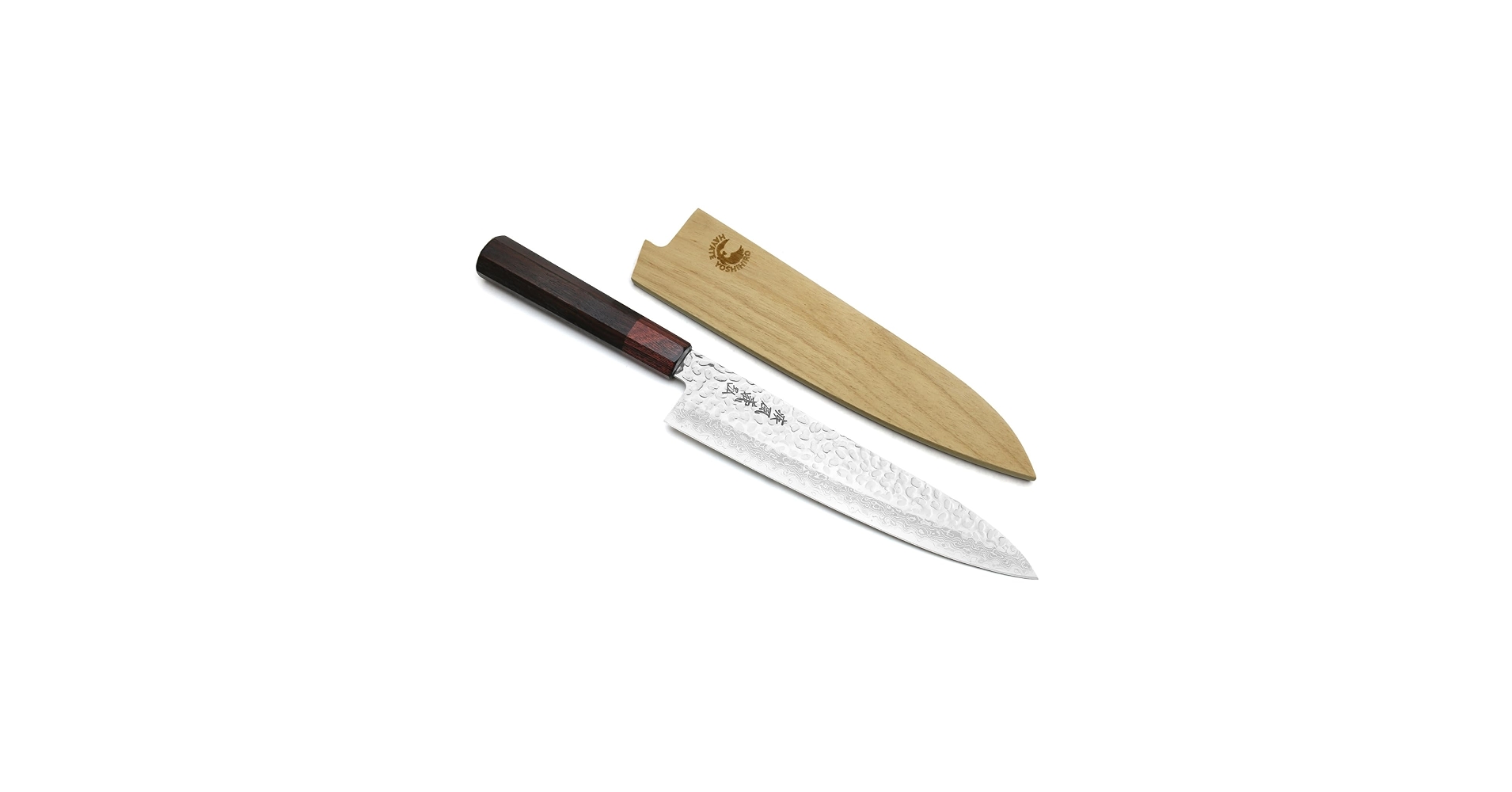
Yoshihiro VG10 Gyuto — the gyuto pick (refined)
If you’ve decided the gyuto shape is right for you and want a sharper edge and better fit-and-finish than the Tojiro without moving into professional pricing, the Yoshihiro is the natural next step up.
Pros:
- Sharper factory edge, less initial sharpening needed
- Comfortable balance for longer prep sessions
- Noticeable quality jump over true entry-level gyutos
Cons:
- Costs meaningfully more than the Tojiro for a similar core spec
- Handle finishing quality varies slightly batch to batch
- Not built for heavy daily butchery-style work

Recommendation by use case
- You cook mostly vegetables and light prep: Santoku — the Misono UX10 if budget allows, otherwise any well-reviewed VG10 santoku.
- You cook a wide variety, including meat and fish regularly: Gyuto — start with the Tojiro DP if it’s your first Japanese knife.
- You already rock-cut without thinking about it (most home cooks trained informally by watching Western chefs): Gyuto.
- You have limited counter space or a smaller cutting board: Santoku — the shorter blade is genuinely easier to manage.
- You want one knife that does almost everything reasonably well and don’t want to think about it again: Gyuto, specifically an 8-inch (210mm).
FAQ
Is a santoku or a gyuto better for beginners?
A santoku’s shorter blade is usually easier to control at first. But if you already rock the knife when you chop, a gyuto will feel more natural from day one. For a full first-knife walkthrough, see our best Japanese chef knife for beginners guide.
Can a santoku cut meat?
Yes — a santoku handles everyday portions of meat and boneless chicken without trouble. A gyuto’s longer blade and pointed tip make it better for large roasts, slicing in one long stroke, and trimming fat. If meat and fish are a big part of your cooking, see our best gyuto for meat and fish prep.
Which is better for vegetables?
The santoku’s flatter edge suits the straight up-and-down push cut most people use on vegetables, so it has a slight edge here. We compare the two specifically for vegetable prep in santoku vs gyuto for vegetables.
What size santoku or gyuto should I get?
For most home cooks, a 165–180mm santoku or a 210mm (8-inch) gyuto. Go up to a 240mm gyuto only if you have large hands, a large cutting board, and cut big pieces of meat often. If you have smaller hands, see our best santoku for small hands.
Conclusion
Neither shape is “better” in absolute terms — that framing is where most comparison articles go wrong. What matters is which motion your hands already default to, and what you actually cook most often. In my experience, people who force themselves to learn a shape that doesn’t match their existing habits end up using the knife less, not more, which defeats the entire point of upgrading.
If you’re still unsure after reading this, here’s the simplest test: next time you chop an onion, watch your own hand. If the knife tip stays down and the heel rocks up and down, buy a gyuto. If you’re lifting the whole blade and coming straight down each time, buy a santoku.
Ready to decide? Compare current pricing on the Misono UX10 Santoku and Tojiro DP Gyuto using the links above. If you’re a complete beginner and want the full buying framework first, see our best Japanese chef knife for beginners guide.
コメント