Best Japanese Chef Knife for Beginners (2026)
Affiliate disclosure: This post contains affiliate links. If you buy through them, I earn a small commission at no extra cost to you. I only recommend knives I’d actually put in my own kitchen.
The problem with buying your first Japanese knife
You’ve watched enough cooking videos to know that a proper knife changes everything. Vegetables that used to take ten minutes of sawing now fall apart in seconds under a sharp blade. So you open Amazon, type “Japanese chef knife,” and get hit with a wall of unfamiliar words: gyuto, santoku, VG10, Damascus, Rockwell hardness. Half the listings look identical, prices range from $30 to $500, and the reviews contradict each other.
In my experience, this is exactly where most first-time buyers freeze up. They either grab whatever has the most stars and a low price (often a mistake — more on that below), or they overspend on a knife with features they don’t need yet, like a hand-hammered finish or a 63 HRC super-steel that requires a whetstone they don’t own.
This guide is for the person who wants one good knife that will actually get used every day, not sit in a drawer because it’s too intimidating to sharpen or too expensive to risk chipping.
Who this article is NOT for
Before we go further, let’s be honest about who shouldn’t be reading this as their main buying guide:
- Working chefs who already own a knife roll. If you’re prepping fifty covers a night, you need a different conversation about steel hardness, edge retention under heavy use, and probably a specialist gyuto or yanagiba. I’ve written a separate guide for that.
- Collectors chasing rare steel or hand-forged blades. If you’re after a Yu Kurosaki or a custom Sakai smith’s work, price isn’t your main concern — craftsmanship and provenance are. This isn’t that article.
- Anyone who wants a knife that never needs sharpening or hand-washing. Every knife on this list needs some care. If that’s a dealbreaker, a Western-style stainless knife might genuinely suit you better, and that’s fine.
If none of those describe you, keep reading — this is written for someone buying their first real knife and wanting to get it right the first time.
What actually matters when choosing your first knife (3 criteria)
After going through dozens of options and testing a handful myself, I narrowed the decision down to three things that matter far more than brand name or marketing photos.
1. Blade shape matches how you actually cook. A gyuto (the Japanese take on a Western chef’s knife) has a curved belly, which makes it good for rocking through herbs and for general all-purpose work. A santoku is flatter, with a more upright “sheepsfoot” tip, and suits people who push-cut straight down rather than rock the blade. Neither is objectively better — it’s about your existing habits. If you learned to cook watching Western technique, a gyuto will feel instantly familiar. If you’ve never developed strong knife habits, a santoku is often easier to pick up cleanly.
2. Steel type determines how much maintenance you’re signing up for. Most beginner-friendly Japanese knives use VG10 stainless steel, sometimes wrapped in a Damascus pattern for looks. VG10 sits around 60-61 HRC on the hardness scale, which is the sweet spot for home use: hard enough to hold an edge for weeks of normal cooking, soft enough that it won’t chip if you’re still learning proper cutting-board technique. Avoid carbon-steel blades as a first knife — they’re excellent but need drying immediately after every use to avoid rust, which is a habit most beginners don’t have yet.
3. Handle and balance, not just blade specs. A knife that’s technically superior but feels wrong in your hand will get used less. Japanese knives typically come in either a Western-style handle (like a normal chef’s knife, comfortable if that’s what you’re used to) or a traditional wa-handle (rounder, lighter, octagonal). In my experience, first-time buyers who’ve only used Western knives adjust faster to a Western-handled Japanese blade.
Comparison table
| Knife | Blade Shape | Steel | Price (approx) | Best For |
|---|---|---|---|---|
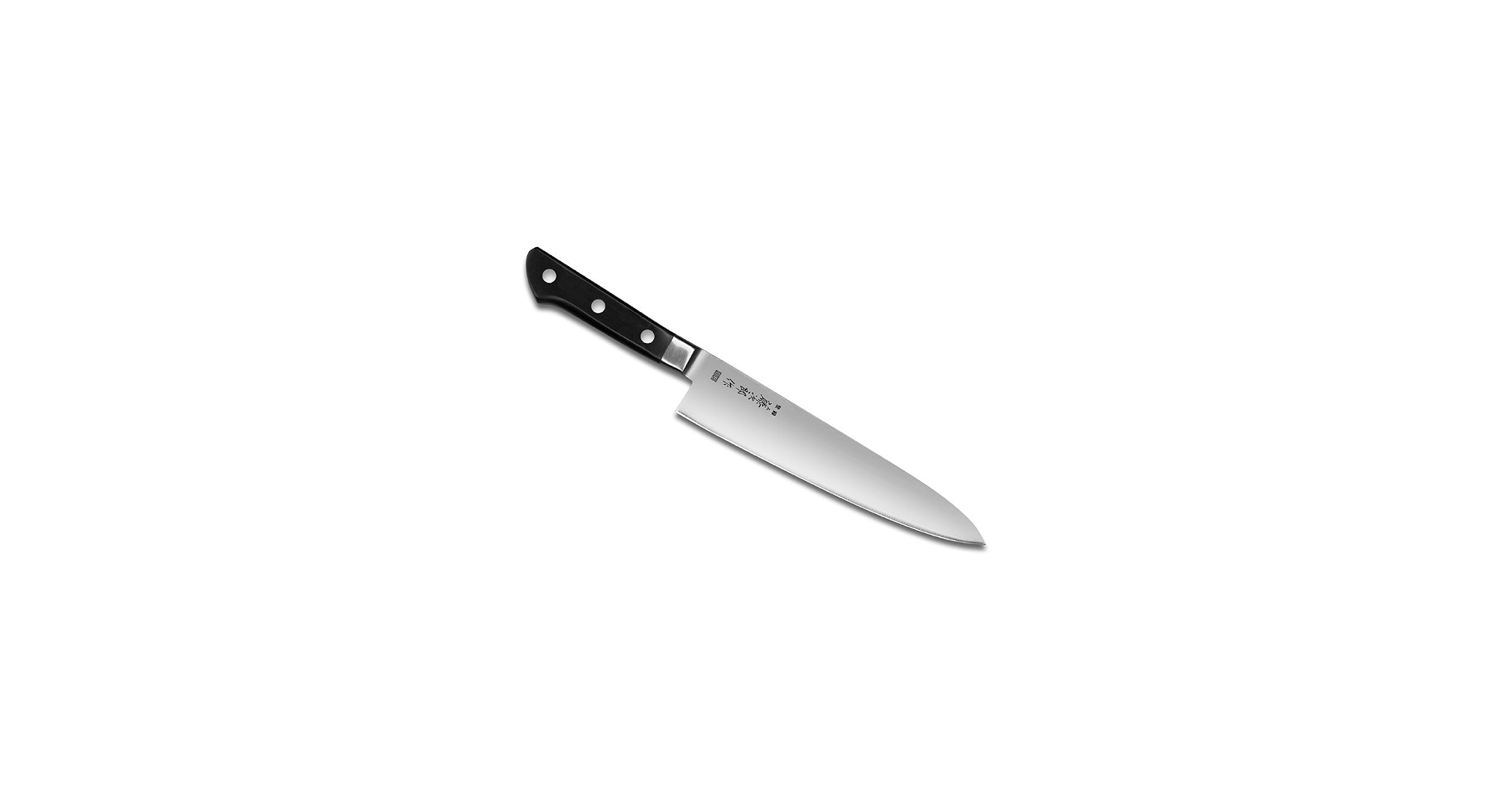
| Tojiro DP Gyuto | Gyuto | VG10, 3-layer | $139.00 | True beginners, best value |
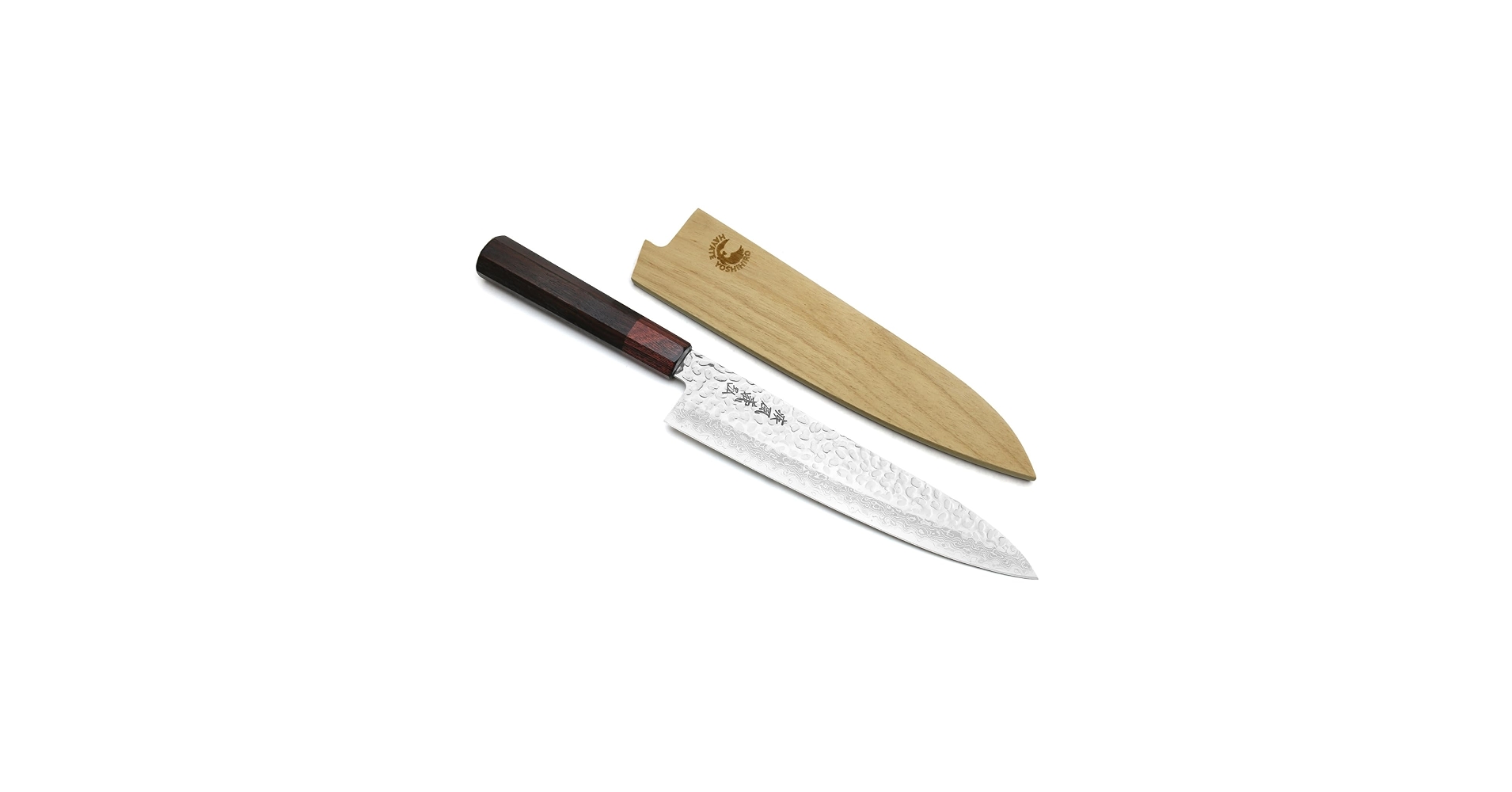
| Yoshihiro VG10 Gyuto | Gyuto | VG10 | $189.99 | Slight step up, sharper out of box |
| Misono UX10 Santoku | Santoku | Swedish stainless | $150–280 | Buyers who want to skip a second upgrade |
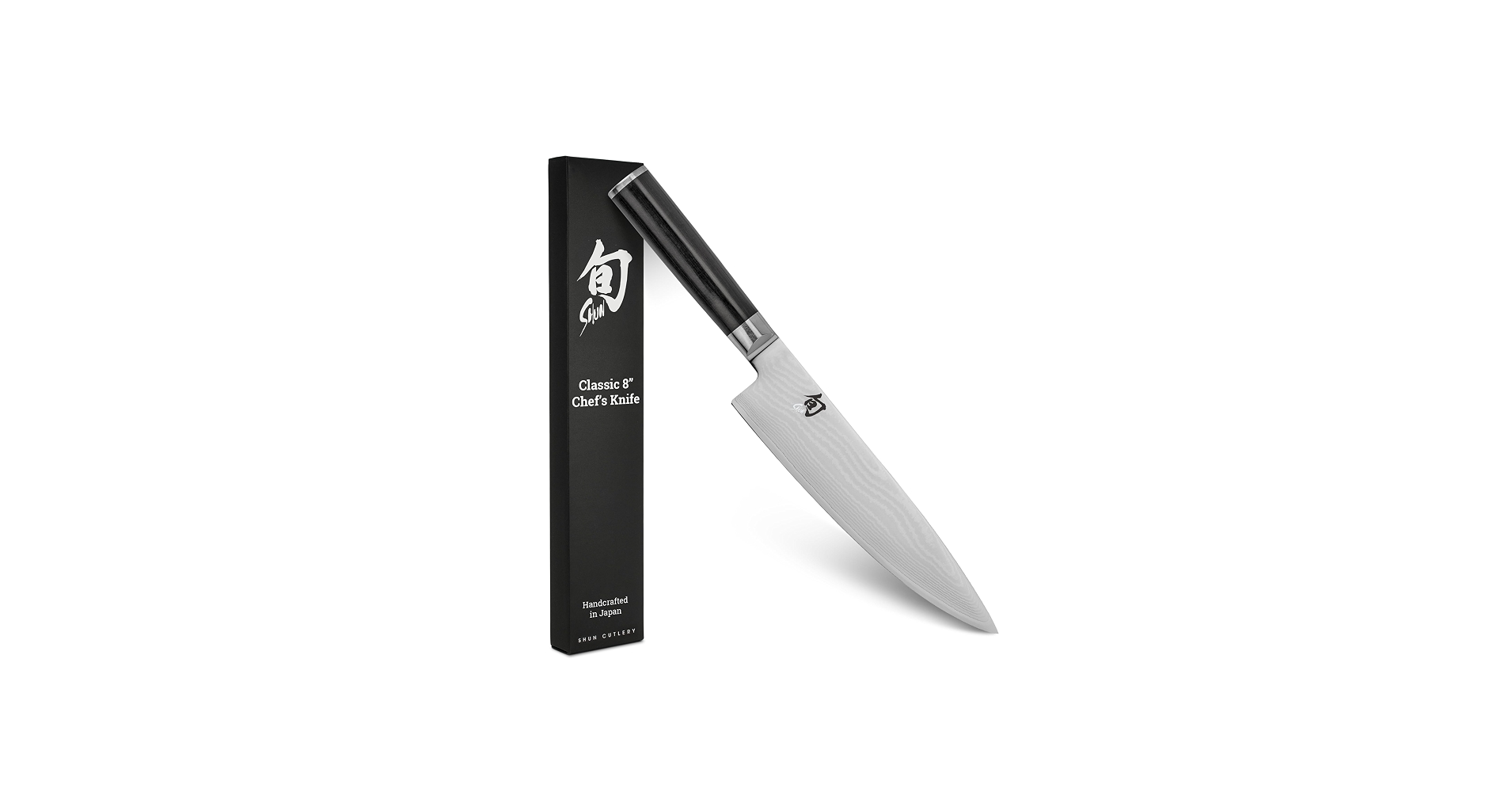
| Shun Classic Gyuto | Gyuto | VG-MAX Damascus | $170–280 | Buyers who want it to also look great |
Individual reviews
Tojiro DP Gyuto
The Tojiro DP series has been the internet’s go-to “first Japanese knife” recommendation for years, and having used one, I understand why. It’s a simple three-layer construction — a hard VG10 core sandwiched between softer stainless — which keeps the price down while still giving you a genuinely sharp, easy-to-maintain edge.
Pros:
- Excellent value; performs well above its price point
- VG10 core takes a very keen edge
- Widely available with easy-to-source replacement parts if the handle ever needs attention
Cons:
- Handle is plain plastic-composite — functional, not beautiful
- No fancy Damascus cladding if you care about looks
- Slightly thicker spine than pricier gyutos, so it’s a touch less nimble on fine work

Yoshihiro VG10 Gyuto
One step up from the Tojiro, the Yoshihiro comes noticeably sharper out of the box in my experience, and the fit and finish feels more deliberate — tighter handle seams, a more refined spine. It’s still VG10, so maintenance expectations are the same, but the extra cost buys you a knife that needs less initial fettling.
Pros:
- Sharper factory edge than most knives in this price bracket
- Good balance point, comfortable for extended prep sessions
- Reasonably priced for the quality jump over entry-level options
Cons:
- Noticeably pricier than the Tojiro for a similar steel spec
- Some batches have inconsistent handle finishing — worth checking recent reviews before buying
- Still not ideal for very heavy use like breaking down whole chickens daily

Misono UX10 Santoku
This is the knife you’ll spot in the hands of chefs at serious Japanese restaurants, scaled down to santoku form. It’s a genuine step above the other two in terms of blade geometry — thin behind the edge, which means less resistance cutting through dense vegetables.
Pros:
- Exceptional blade geometry; noticeably effortless cutting
- Swedish stainless steel resists corrosion very well
- A knife you won’t need to “upgrade from” later
Cons:
- Meaningfully more expensive than a true beginner knife
- Plain appearance — no Damascus pattern, no flourish
- Stainless handle can feel slippery when wet, takes adjustment


Shun Classic Gyuto
If you want your first knife to also look the part on a magnetic strip, the Shun Classic is hard to beat. The Damascus cladding isn’t just decorative — the layered construction helps food release from the blade slightly better than a plain-finish knife.
Pros:
- Genuinely beautiful — the kind of knife people ask about
- VG-MAX steel holds an edge well between sharpenings
- Comfortable, ergonomic Western-style handle
Cons:
- You’re paying partly for aesthetics, not just performance
- Bulkier bolster than some prefer for precision work
- Damascus finish shows watermarks if not dried promptly

Recommendation by use case
- Tightest budget, just want to see what the fuss is about: Tojiro DP Gyuto. It won’t disappoint, and if you decide Japanese knives aren’t for you, you haven’t lost much.
- Want to buy once and skip the upgrade cycle: Misono UX10 Santoku. It costs more upfront but performs at a level most people never feel the need to move past.
- Cook with a rocking motion, learned on Western knives: Yoshihiro VG10 Gyuto — familiar shape, sharper than entry-level, without jumping to professional pricing.
- Want it to double as a gift-worthy, good-looking piece: Shun Classic Gyuto.
Conclusion
There’s no single “best” first Japanese knife — there’s a best knife for how you actually cook, how much maintenance you’re willing to do, and what you’re comfortable spending. In my experience, the mistake beginners make isn’t picking the “wrong” knife off this list — it’s picking a knife that’s harder to maintain than they expected, then blaming the knife when the edge dulls after a month of dishwasher trips.
Pick based on your habits, not the prettiest photo, and hand-wash it. That’s really the whole secret.
Ready to pick one? Check current prices and availability for the Tojiro DP Gyuto, Yoshihiro VG10 Gyuto, Misono UX10 Santoku, and Shun Classic Gyuto on Amazon — links above. If you’re still torn between a santoku and a gyuto shape specifically, re-read the blade-shape breakdown above — it’s the single biggest factor in which of these four you’ll actually reach for.
コメント