Affiliate disclosure: This post contains affiliate links. If you buy through them, I earn a small commission at no extra cost to you. I only recommend knives I’d actually put in my own kitchen.
The problem: knives feel like a risky gift to buy someone else
You want to get someone a Japanese knife because you know they’d love it — maybe they mentioned watching cooking videos, or they’re always the one hosting dinner. But knives are personal. Blade shape, handle style, even weight — these are things the person would normally choose for themselves, and getting it wrong means an expensive gift that ends up in a drawer.
In my experience, the trick to a successful knife gift isn’t finding the objectively “best” knife — it’s finding one versatile and universally well-regarded enough that it works regardless of the recipient’s specific habits.
Who this article is NOT for
- Buying for a professional chef. They already have strong opinions and likely a full knife roll — see our professional chef guide instead, or better, ask them directly what they need.
- Buying for someone who’s expressed a strong preference already (e.g., they’ve mentioned wanting a specific brand or shape). Just get that one — don’t second-guess a clear signal.
- Anyone shopping purely by lowest price. A gift knife under $50 risks feeling like an afterthought; this guide assumes a genuine gift budget.
Selection criteria (3 points)
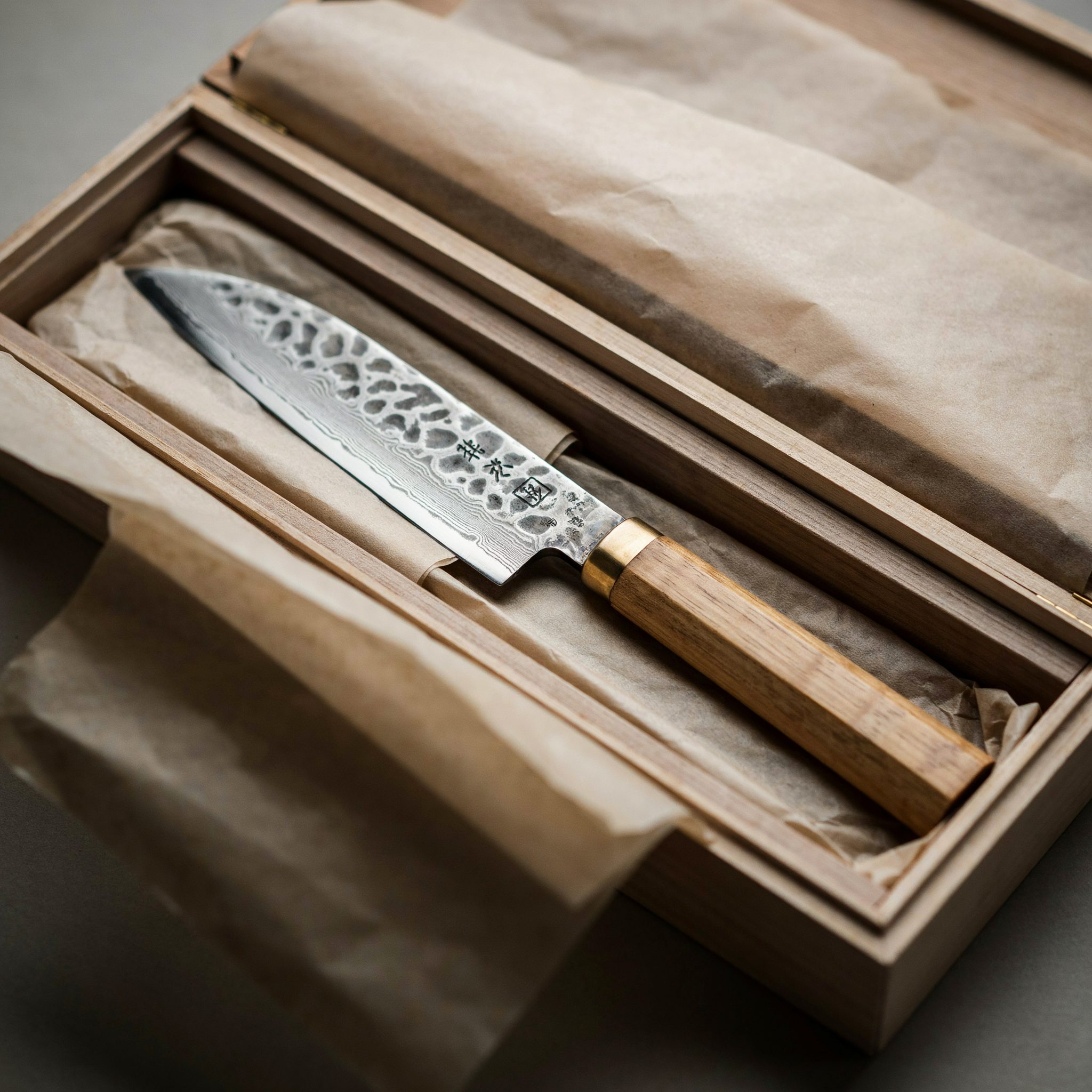
1. Visual impact matters more for gifts than for personal purchases. When you buy for yourself, performance is everything. When gifting, the unboxing moment counts — a beautiful Damascus pattern or elegant wooden saya (sheath) makes the gift feel special even before it’s used.
2. Versatility over specialization. You don’t know exactly how the recipient cooks, so a knife that handles a wide range of tasks (a gyuto, generally) is a safer bet than a specialized blade like a nakiri or yanagiba.
3. A story or provenance adds meaning. Especially for someone who loves Japanese culture, a knife with a traceable origin — like Sakai forging heritage — turns a kitchen tool into something closer to a keepsake.
Comparison table
| Knife | Visual Appeal | Versatility | Price | Best For |
|---|---|---|---|---|
| Shun Classic Gyuto | High (Damascus) | High | $165–250 | The “wow factor” gift |
| Miyabi Birchwood 5000MCD | Very High | High | $315–440 | Special-occasion, higher-budget gift |
| Sakai Takayuki Gyuto | Moderate-High | High | $190–375 | Gift with cultural story |
Individual reviews
Shun Classic Gyuto
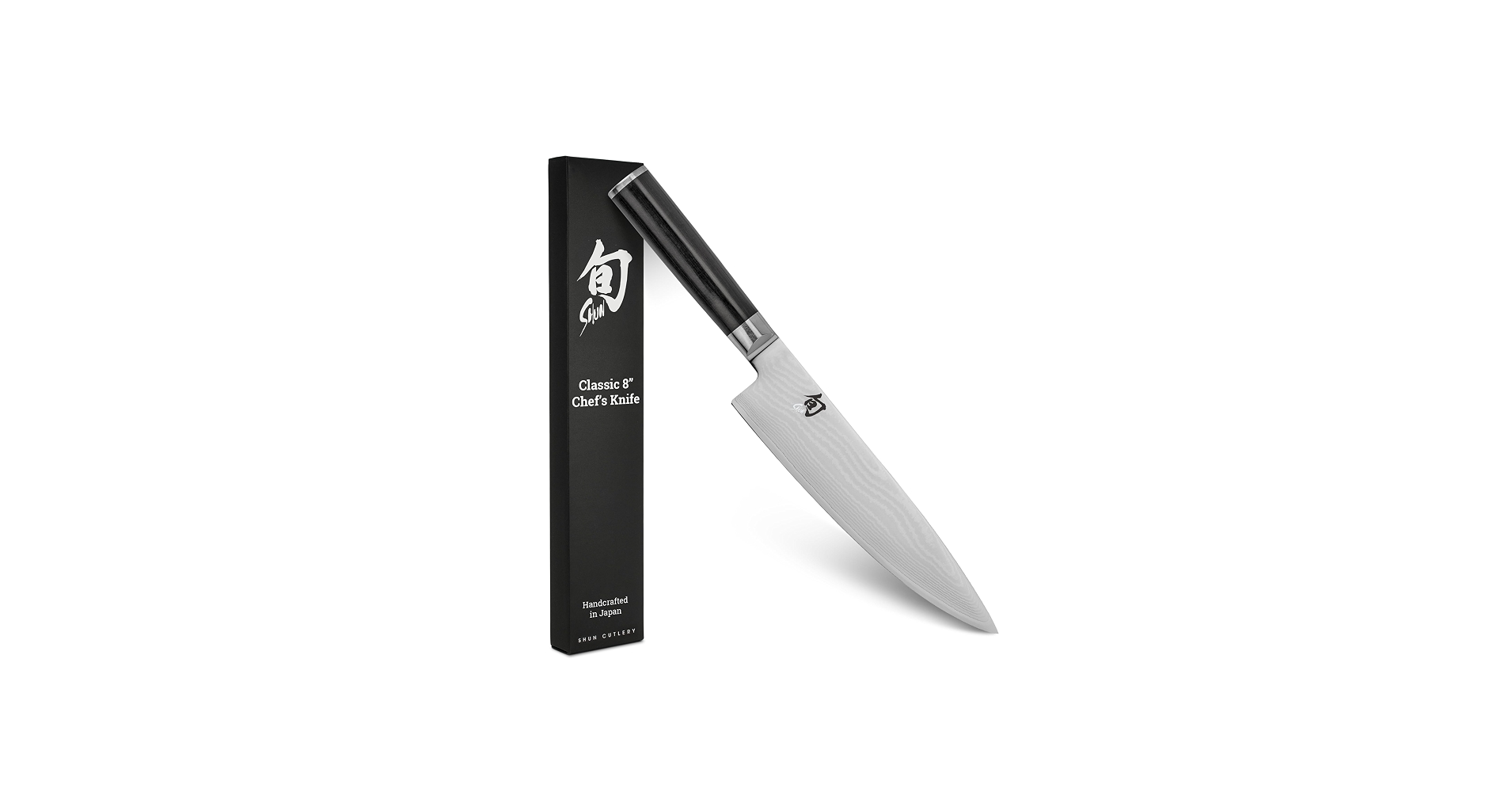
The Shun Classic consistently shows up on gift guides because it hits the exact combination gift-buying calls for: it looks genuinely striking with its Damascus cladding, comes in nice retail packaging, and performs well enough that the recipient won’t feel like the beauty is a substitute for function.
Pros:
- Strong unboxing moment — looks like a considered, premium gift
- VG-MAX steel performs well, not just decorative
- Comfortable, familiar Western-style handle suits most recipients
Cons:
- Mid-to-high price without being the top-tier option
- Bulkier bolster than some prefer
- Requires prompt drying to keep the Damascus finish looking pristine

Miyabi Birchwood 5000MCD
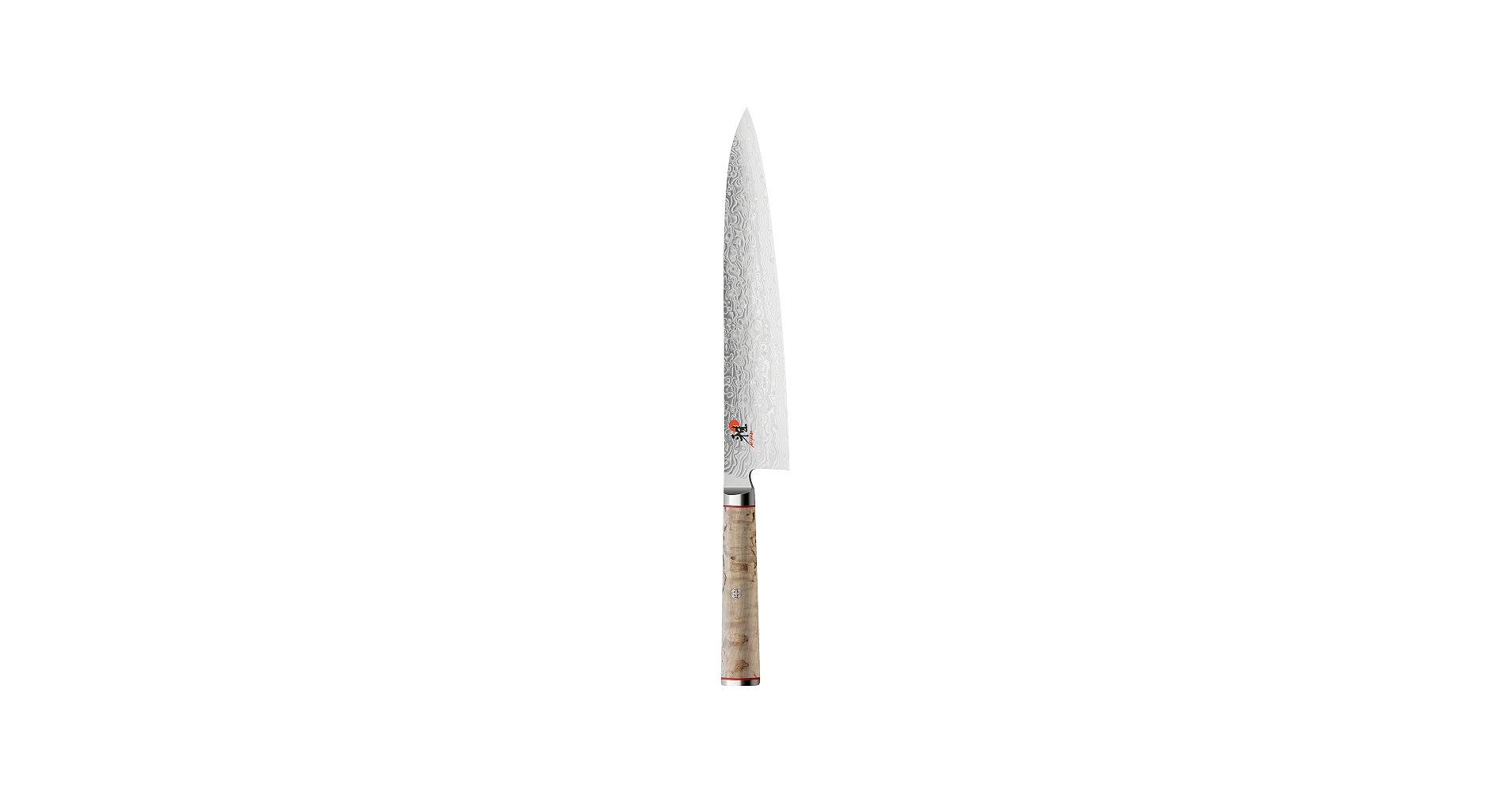
For a bigger-budget, special-occasion gift — a milestone birthday, a wedding, a retirement — the Miyabi Birchwood is genuinely showstopping. The birchwood handle and hammered Damascus pattern make it look like a piece of craft rather than a kitchen tool.
Pros:
- Among the most visually striking knives in this niche
- High-performance steel, not just a display piece
- Distinctive birchwood handle feels premium in hand
Cons:
- Significant investment for a gift
- Handle material needs slightly more care than synthetic alternatives
- Might feel “too nice to use” for some recipients, ironically limiting how often it gets used

Sakai Takayuki Gyuto
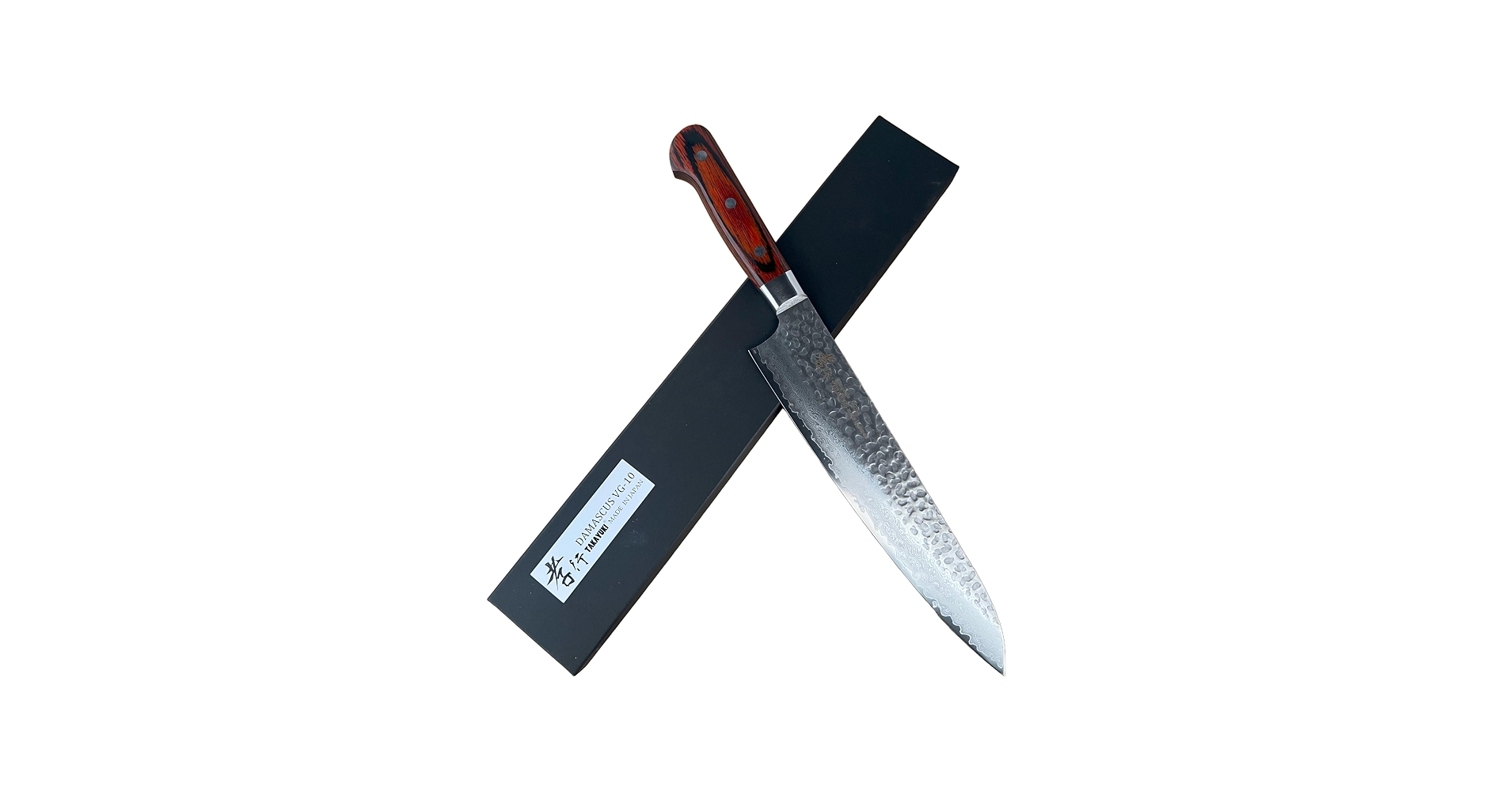
If the recipient is drawn to Japanese culture specifically — not just cooking — a Sakai Takayuki knife carries genuine weight. Sakai has been a center of Japanese blade forging for centuries, and gifting from that tradition adds a layer of meaning a mass-produced knife can’t match.
Pros:
- Real cultural and historical provenance
- Wide range of price points depending on specific line chosen
- Strong performance alongside the story
Cons:
- Less immediately “flashy” than Damascus-patterned alternatives
- Requires some explanation for a recipient unfamiliar with Sakai’s significance
- Sourcing the right specific line takes a bit more research

Recommendation by use case
- General gift, broad appeal, safe choice: Shun Classic Gyuto.
- Milestone or special-occasion, higher budget: Miyabi Birchwood 5000MCD.
- Recipient loves Japanese culture specifically, not just cooking: Sakai Takayuki Gyuto.
- Recipient is a beginner cook just getting into it: Consider our beginner guide instead — a lower-pressure entry knife might suit better than a premium gift knife.
Conclusion
A knife is one of the few kitchen gifts that gets used almost daily if you choose well — which is exactly what makes it worth the extra thought. In my experience, the safest bet for most recipients is a well-balanced, good-looking gyuto rather than a highly specialized shape; you can always let them build out a more specific collection themselves later.
Ready to buy a gift? Compare current pricing on the Shun Classic Gyuto, Miyabi Birchwood 5000MCD, and Sakai Takayuki Gyuto using the links above. Pair it with our wabocho care guide as a thoughtful add-on for a complete gift.
コメント