Affiliate disclosure: This post contains affiliate links. If you buy through them, I earn a small commission at no extra cost to you. I only recommend knives I’d actually put in my own kitchen.
- The problem: nobody explains maintenance before the purchase, only after the knife is already dull or rusted
- Who this article is NOT for
- Selection criteria: what actually protects your investment (3 points)
- Comparison: maintenance needs by knife type
- Recommended maintenance tools
- Recommendation by use case
- Conclusion
The problem: nobody explains maintenance before the purchase, only after the knife is already dull or rusted
Most buying guides focus entirely on choosing the knife and treat maintenance as an afterthought — a brief “hand wash only” note at the bottom. Then buyers get home, treat their new Japanese knife like their old Western one, and are confused a few months later when the edge is dull or, worse, spotted with rust.
In my experience, maintenance is genuinely the difference between a Japanese knife that performs beautifully for a decade and one that gets written off as “not that special” after a few disappointing months.
Who this article is NOT for
- Buyers who already have a solid maintenance routine down. If you’re already honing regularly and hand-washing, this won’t teach you much new.
- Anyone unwilling to do any extra maintenance beyond a dishwasher cycle. Being honest: if that’s a hard limit, a Japanese knife may not be the right purchase, and that’s a legitimate choice.
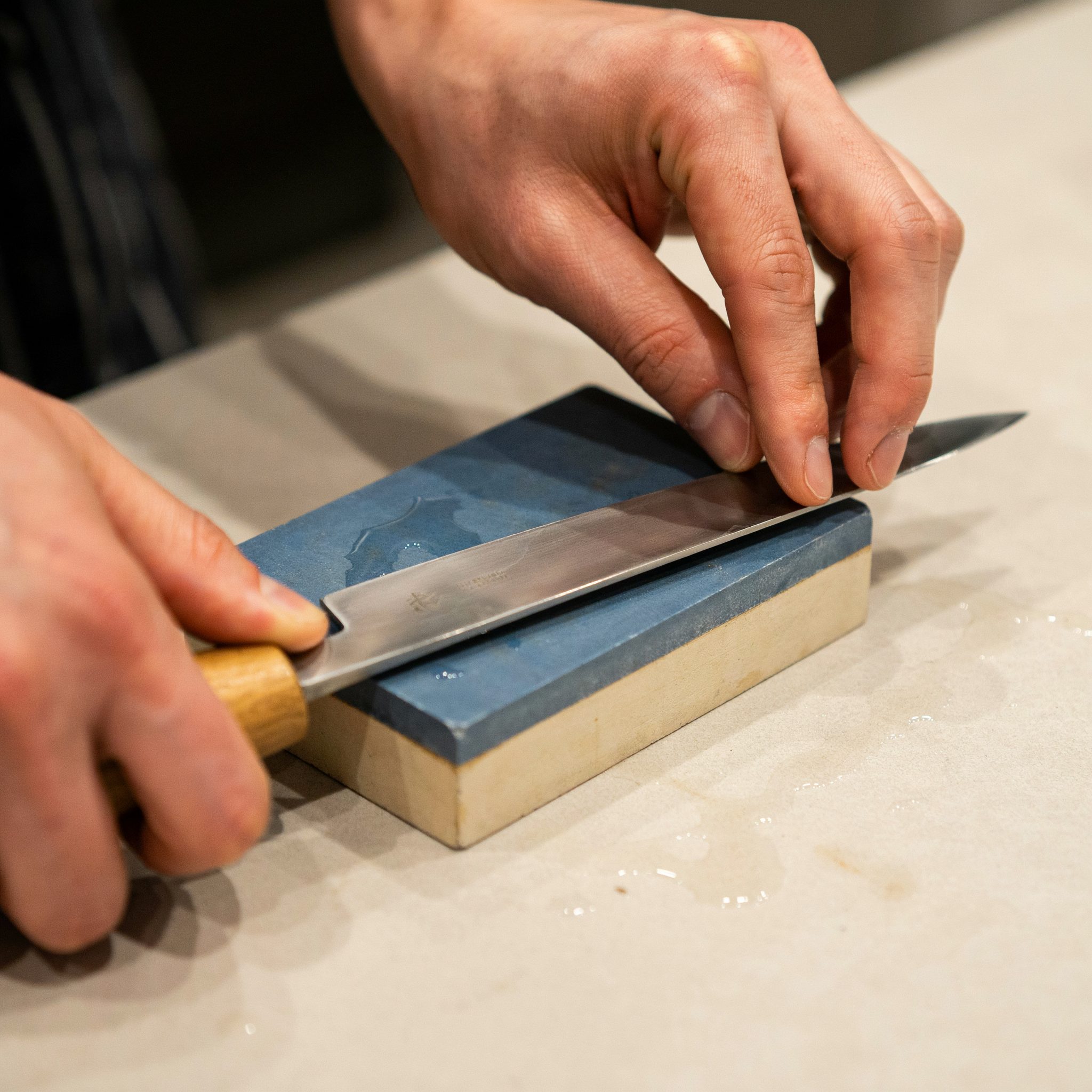
- Readers wanting a full whetstone-sharpening tutorial. This covers day-to-day care and when to seek professional sharpening — full sharpening technique is a separate, deeper topic.
Selection criteria: what actually protects your investment (3 points)
1. Consistent hand-washing and immediate drying. This is the single highest-impact habit. Dishwashers use harsh detergent and high heat that dull edges and can cause pitting or rust, especially on higher-carbon steels. Hand-wash with mild soap and dry immediately — don’t let it air dry in a rack.
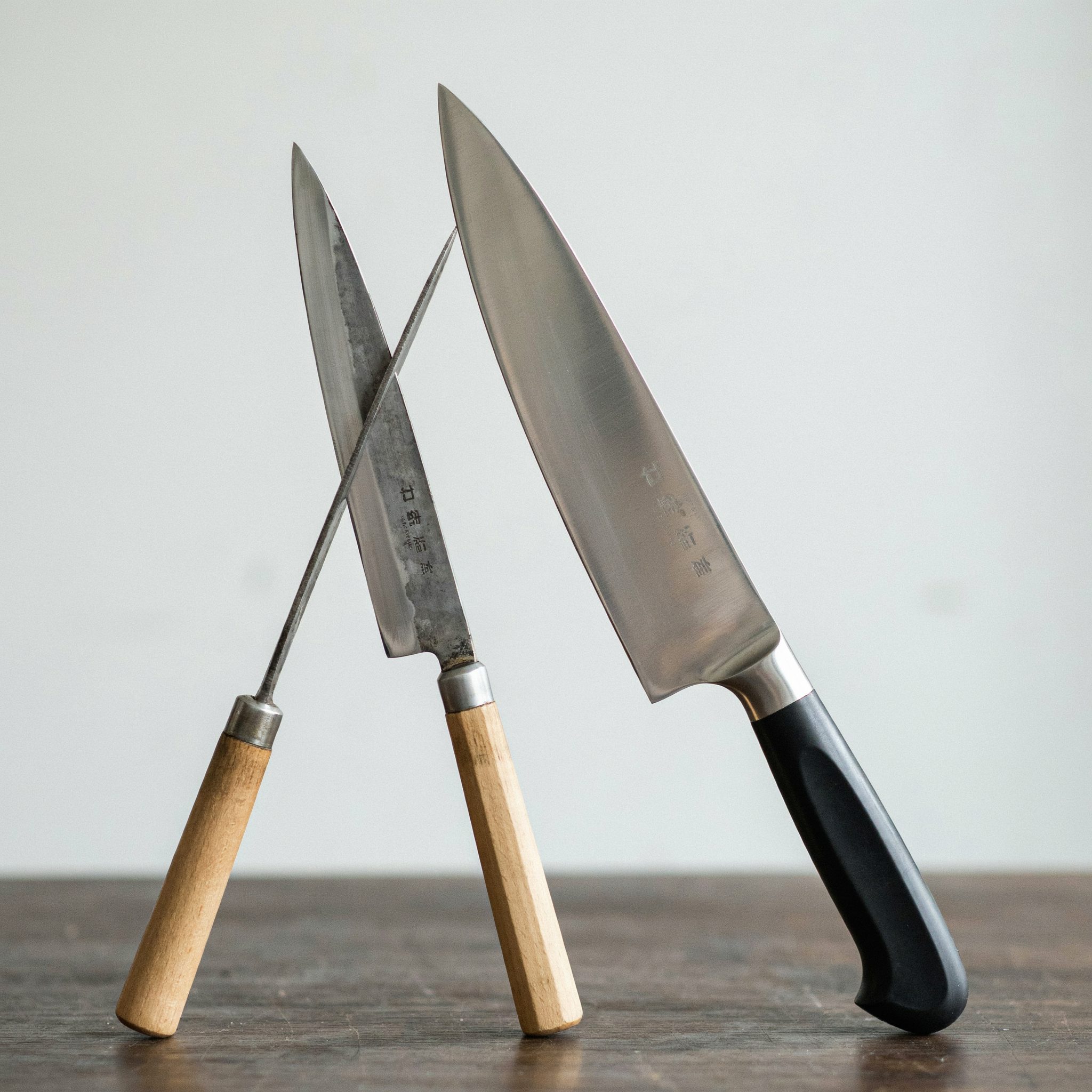
2. Regular honing, not just eventual sharpening. A honing rod (or a few passes on a fine ceramic rod) realigns the edge between full sharpenings, extending the time between more involved maintenance. Doing this every few uses keeps the knife performing near its best far longer than sharpening alone.
3. Appropriate cutting surface. Glass, stone, and bamboo (surprisingly) are all harder on a Japanese knife’s edge than most people expect. A soft wooden or quality soft-plastic cutting board preserves the edge significantly longer than harder alternatives.
Comparison: maintenance needs by knife type
| Stainless-clad (e.g., Tojiro DP, VG10 knives) | Carbon-core / traditional (e.g., premium Sakai lines) | |
|---|---|---|
| Rust risk | Low | Higher — needs immediate drying every use |
| Sharpening frequency | Moderate | More frequent, rewards regular honing |
| Beginner-friendliness | High | Lower — better for experienced maintainers |
| Recommended cutting board | Wood or soft plastic | Wood strongly preferred |
Recommended maintenance tools
A diamond sharpening rod
A diamond-coated rod (like the MITSUMOTO SAKARI 10-inch flat diamond rod), used every few sessions, realigns a rolled edge and removes a small amount of material for a genuinely sharper result than a plain ceramic hone — useful across both stainless and carbon-core Japanese blades. This is the single easiest habit to build and delivers a disproportionate improvement in day-to-day sharpness.
Pros:
- Quick, low-skill maintenance step
- Extends time between full sharpenings significantly
- Inexpensive relative to the improvement in performance
Cons:
- Doesn’t replace the need for occasional proper sharpening
- Slight technique required to hold a consistent angle
- Easy to forget as a habit until the edge noticeably dulls


A Hinoki cutting board
Hinoki (Japanese cypress) is the traditional pairing for a Japanese knife — softer and gentler on an edge than typical Western end-grain hardwood boards, and naturally antimicrobial with a distinctive aroma. Pairing your knife with a genuinely knife-friendly cutting surface protects the edge far more than most buyers expect — the difference between a board like this and a glass or stone one is significant over the life of the knife.
Pros:
- Meaningfully extends time between sharpenings
- Gentler on the edge than almost any alternative surface
- A one-time purchase that pays off over the knife’s entire lifespan
Cons:
- Requires its own light maintenance (occasional oiling)
- Higher upfront cost than a plastic cutting board
- Heavier and less dishwasher-convenient than synthetic alternatives


Recommendation by use case
- New to Japanese knife maintenance, want the simplest possible routine: Hand-wash, dry immediately, hone every few uses — that’s 90% of what matters.
- Own a carbon-core or traditional Sakai-forged knife: Be especially diligent about immediate drying; rust risk is real and preventable with consistent habits.
- Cook daily and want to minimize edge degradation long-term: Invest in a proper wooden cutting board — it’s the highest-leverage purchase beyond the knife itself.
- Not confident sharpening yourself: Many local kitchen shops and some mail-in sharpening services offer professional sharpening — use one every 6-12 months rather than attempting technique you’re not confident in.
Conclusion
A well-maintained mid-range knife will consistently outperform an expensive knife that’s been neglected. In my experience, the buyers happiest with their Japanese knife purchase years later aren’t necessarily the ones who spent the most — they’re the ones who built simple, consistent habits: hand-wash, dry immediately, hone regularly, and use a forgiving cutting surface.
Want to protect your investment properly? Check current pricing on honing rods and wooden cutting boards using the links above. Just bought your first knife? See our beginner’s guide for the full picture, from purchase through daily use.
コメント