Affiliate disclosure: This post contains affiliate links. If you buy through them, I earn a small commission at no extra cost to you. I only recommend knives I’d actually put in my own kitchen.
The problem: two premium brands, two completely different philosophies
Once you’re shopping in the $200+ range, Misono and Shun both come up constantly — but they represent almost opposite approaches to what a premium Japanese knife should be. Misono bets everything on blade geometry and performance; Shun bets on combining strong performance with striking visual design. Neither approach is wrong, but conflating them leads to buyer’s remorse if your priorities don’t match the brand.
In my experience, this is the comparison that trips up buyers most, because at this price point people often assume “premium” means the same thing across brands. It doesn’t.
Who this article is NOT for
- Budget-conscious buyers. Both brands sit at $170+; if that’s outside your range, see our best Japanese chef knife under $200 guide instead.
- First-time Japanese knife buyers. This comparison assumes you already understand basic blade shapes and are ready for a serious investment — our beginner guide is the better starting point otherwise.
- Buyers who’ve already chosen based on aesthetics alone. If you already know you want the Damascus look, you’ve effectively already chosen Shun.
Selection criteria (3 points)
1. Blade geometry and cutting performance. This is Misono’s core strength — thin, precise grinding that minimizes resistance. Shun performs well too, but its bulkier bolster and Damascus cladding trade a small amount of pure cutting efficiency for durability and looks.
2. Aesthetic presentation. Shun’s Damascus pattern is genuinely distinctive and a real factor if the knife will be visible — on a magnetic strip, gifted, or simply enjoyed as an object. Misono is plain by comparison, prioritizing function over form entirely.
3. Handle ergonomics and long-session comfort. Both offer Western-style handles, but the specific shape and balance differ enough to matter over extended use — worth considering how long your typical prep sessions run.
Comparison table
| Misono UX10 | Shun Classic | |
|---|---|---|
| Steel | Swedish stainless | VG-MAX, Damascus-clad |
| Price | $200–360 | $170–280 |
| Aesthetic | Plain, function-first | Striking Damascus pattern |
| Blade geometry | Exceptionally thin, precise | Very good, slightly bulkier bolster |
| Best for | Pure performance seekers | Performance + visual appeal |
Individual reviews
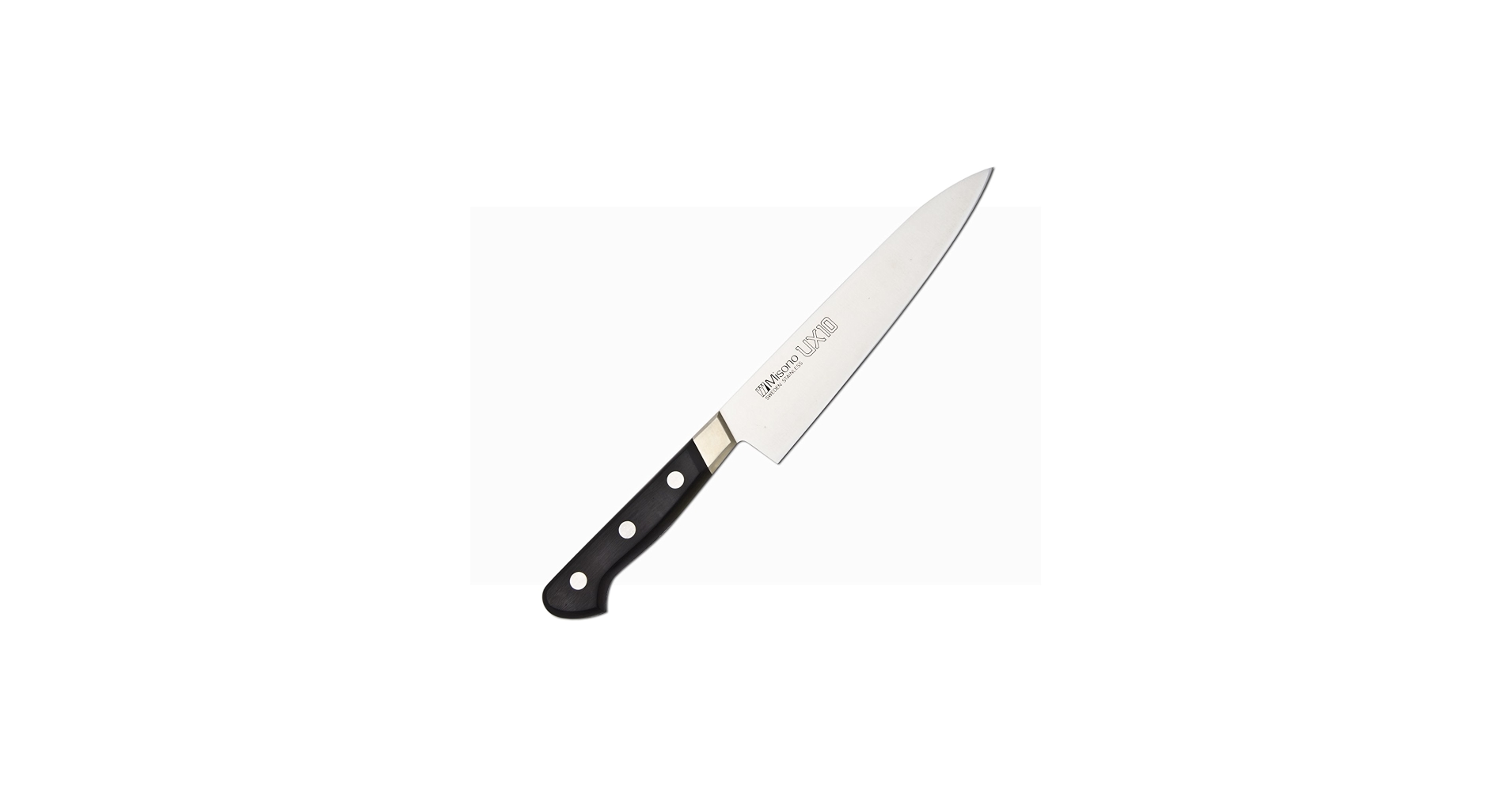
Misono UX10
The UX10’s reputation among professionals rests entirely on how it cuts — the grind is thin enough behind the edge that it noticeably reduces resistance through dense ingredients, a difference you feel within the first few cuts.
Pros:
- Exceptional blade geometry, minimal cutting resistance
- Swedish stainless resists staining very well
- Long-standing reputation among working chefs
Cons:
- Plain aesthetic, no visual flourish
- Stainless handle can be slippery when wet
- Premium pricing throughout

Shun Classic
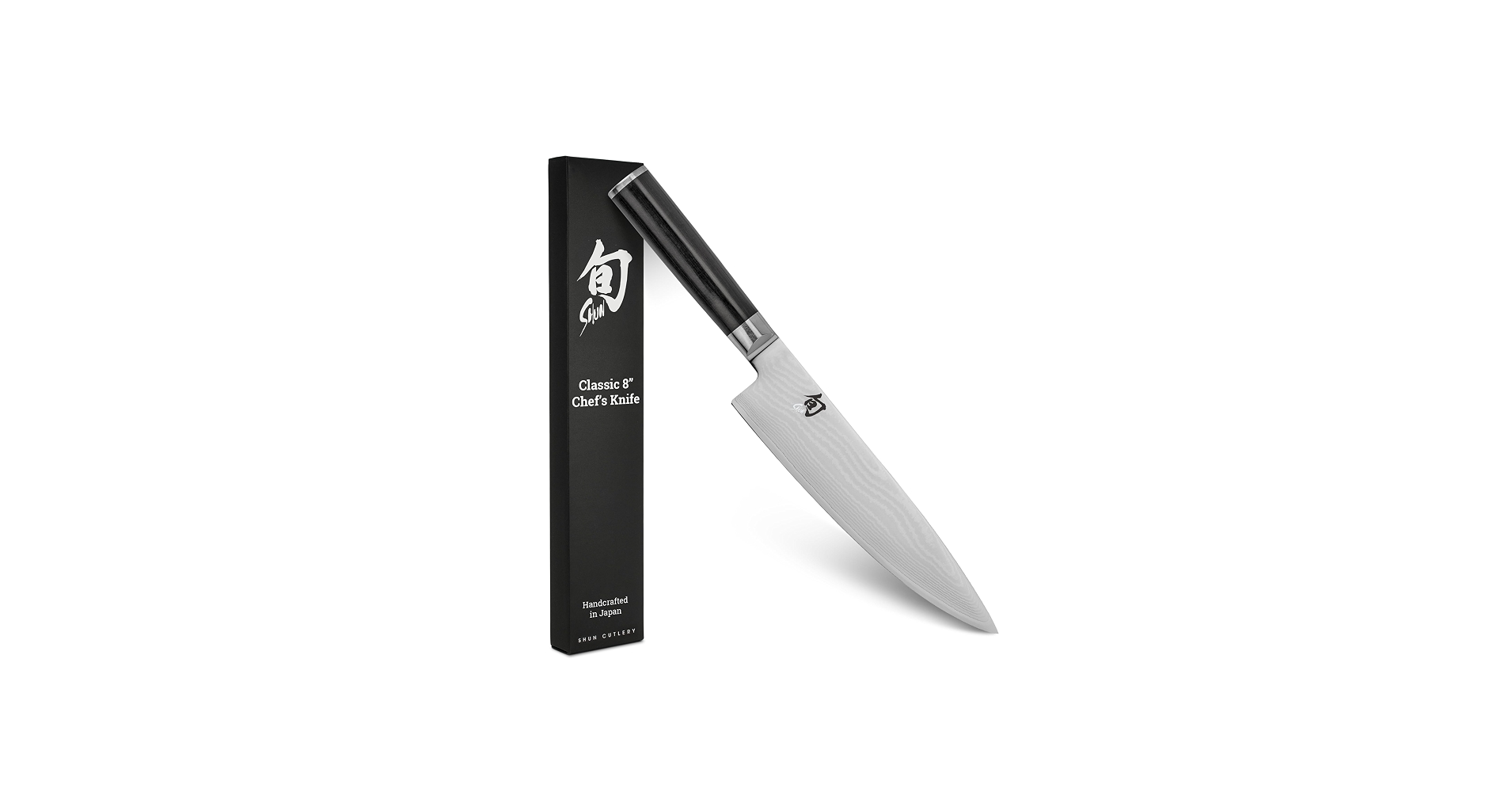
The Shun Classic proves that a beautiful knife doesn’t have to sacrifice real performance — the VG-MAX steel holds an edge well, and the Damascus cladding offers a slight food-release benefit alongside its visual appeal.
Pros:
- Strong balance of genuine performance and striking looks
- Comfortable, ergonomic Western handle
- VG-MAX steel holds an edge well between sharpenings
Cons:
- Bulkier bolster slightly reduces precision compared to Misono
- Requires prompt drying to keep the Damascus finish pristine
- Partly paying for aesthetics rather than pure performance

Recommendation by use case
- Pure performance is your only priority: Misono UX10.
- Want strong performance that also looks the part: Shun Classic.
- Buying to display or gift: Shun Classic — the visual impact matters here.
- Working professional prioritizing edge geometry above all else: Misono UX10.
Conclusion
This isn’t really a “which is better” comparison — it’s a “which philosophy matches your priorities” one. In my experience, chefs who’ve spent years developing an eye for blade geometry tend to gravitate toward Misono, while buyers who want their knife to feel like a considered, beautiful object as well as a tool lean toward Shun. Both are excellent; they’re just answering slightly different questions.
Ready to decide? Compare current pricing on the Misono UX10 and Shun Classic Gyuto using the links above. Want the full professional-grade lineup? See our best Japanese chef knife for professional chefs guide.
Want to see how Misono and Shun compare with Tojiro, Miyabi, Sakai Takayuki and the rest? See our Japanese chef knife brands guide.
コメント