Affiliate disclosure: This post contains affiliate links. If you buy through them, I earn a small commission at no extra cost to you. I only recommend knives I’d actually put in my own kitchen.
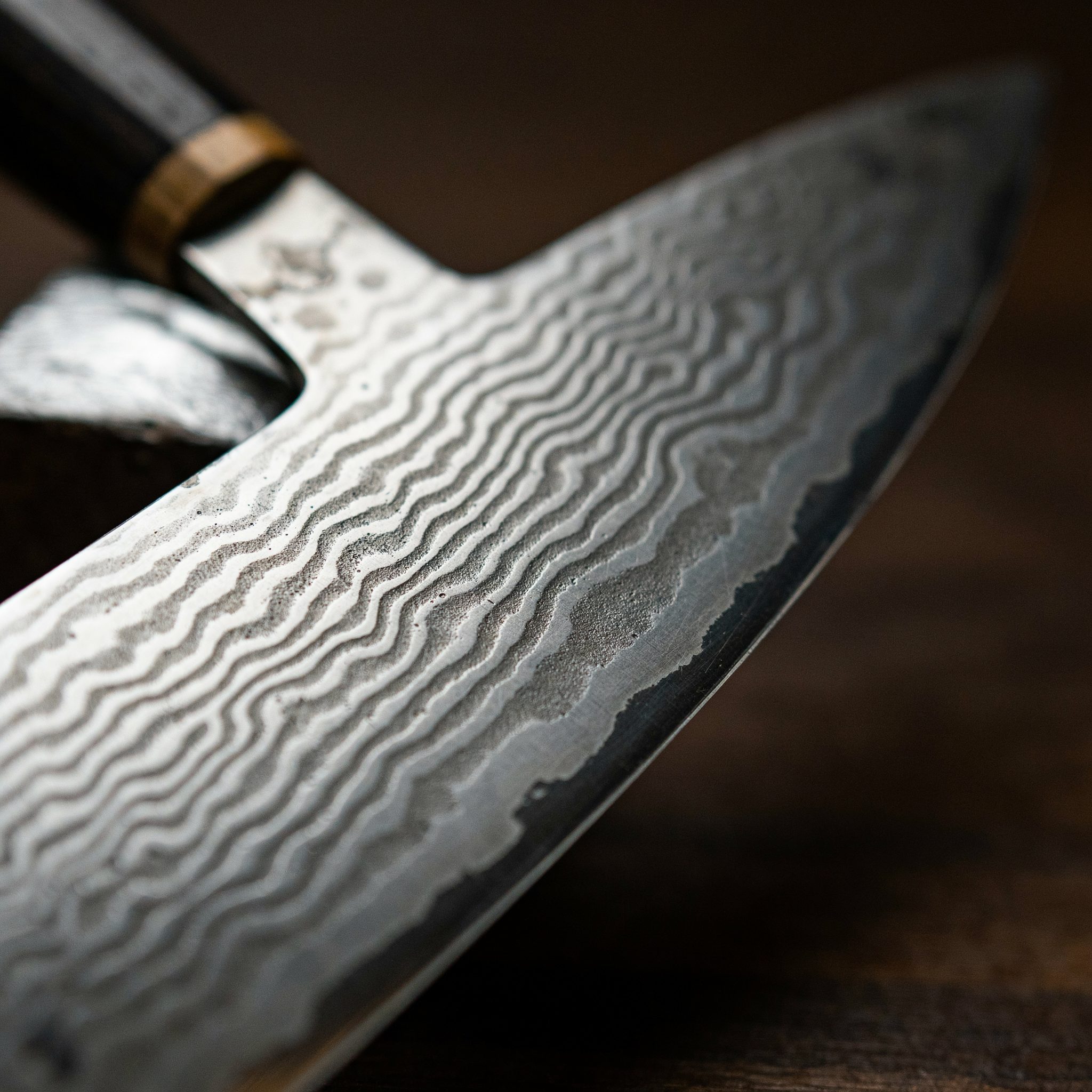
The problem: that beautiful wavy pattern — is it real, or just for Instagram?
You’ve seen the photo. A knife blade with a swirling, wood-grain-like pattern catching the light, usually paired with a moody kitchen backdrop and about 40,000 likes. It looks unmistakably Japanese, unmistakably premium — but is that pattern actually doing anything, or is it a printed finish on an otherwise ordinary blade?
In my experience, this is one of the most common points of confusion for people discovering Japanese knives through social media rather than through cooking. The visual appeal is real, but understanding why it looks that way changes what you should actually be shopping for.
Who this article is NOT for
- Buyers who don’t care about appearance at all. If you just want the sharpest, most practical knife regardless of looks, our brands comparison is more useful.
- Anyone assuming any “Damascus-look” knife is equally authentic. This article specifically separates genuine layered construction from surface-only patterns — if that distinction doesn’t matter to you, skip ahead to a straightforward buying guide.
- Collectors of custom, one-off art knives. This covers accessible, purchasable production knives — not bespoke smith commissions.
Selection criteria (3 points)
1. Real lamination versus surface etching. Genuine Damascus-style knives are built from folded, layered steel — a harder core wrapped in softer outer layers — and the pattern emerges from that actual structure. Some budget knives instead acid-etch or laser-print a pattern onto a plain single-steel blade. Both can look similar in a product photo; only one reflects real construction.
2. Origin of the technique. This style of layered blade construction has deep roots in traditional Japanese sword and blade forging — the same lineage that produced regional centers like Sakai, where blacksmithing traces back centuries. Knowing whether a knife comes from that tradition, or is a modern factory riffing on the look, matters if authenticity is part of what you’re paying for.
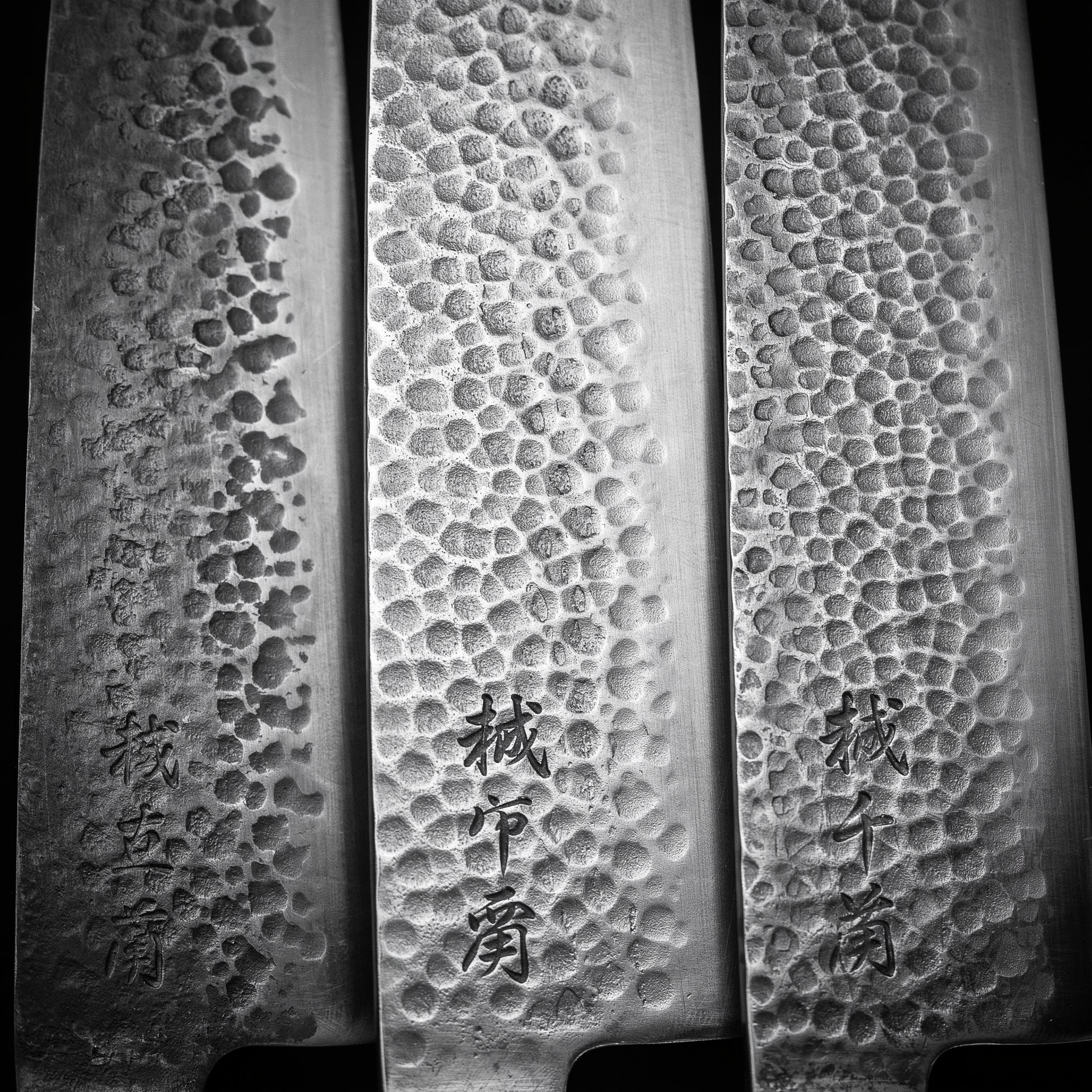
3. Maintenance implications of the pattern itself. A textured, hammered (tsuchime) or Damascus-clad surface can trap moisture in the texture more easily than a smooth polished blade, meaning it needs prompt, thorough drying to avoid spotting — a real practical tradeoff for that look.
Comparison table
| Knife | Construction | Origin | Price | Best For |
|---|---|---|---|---|
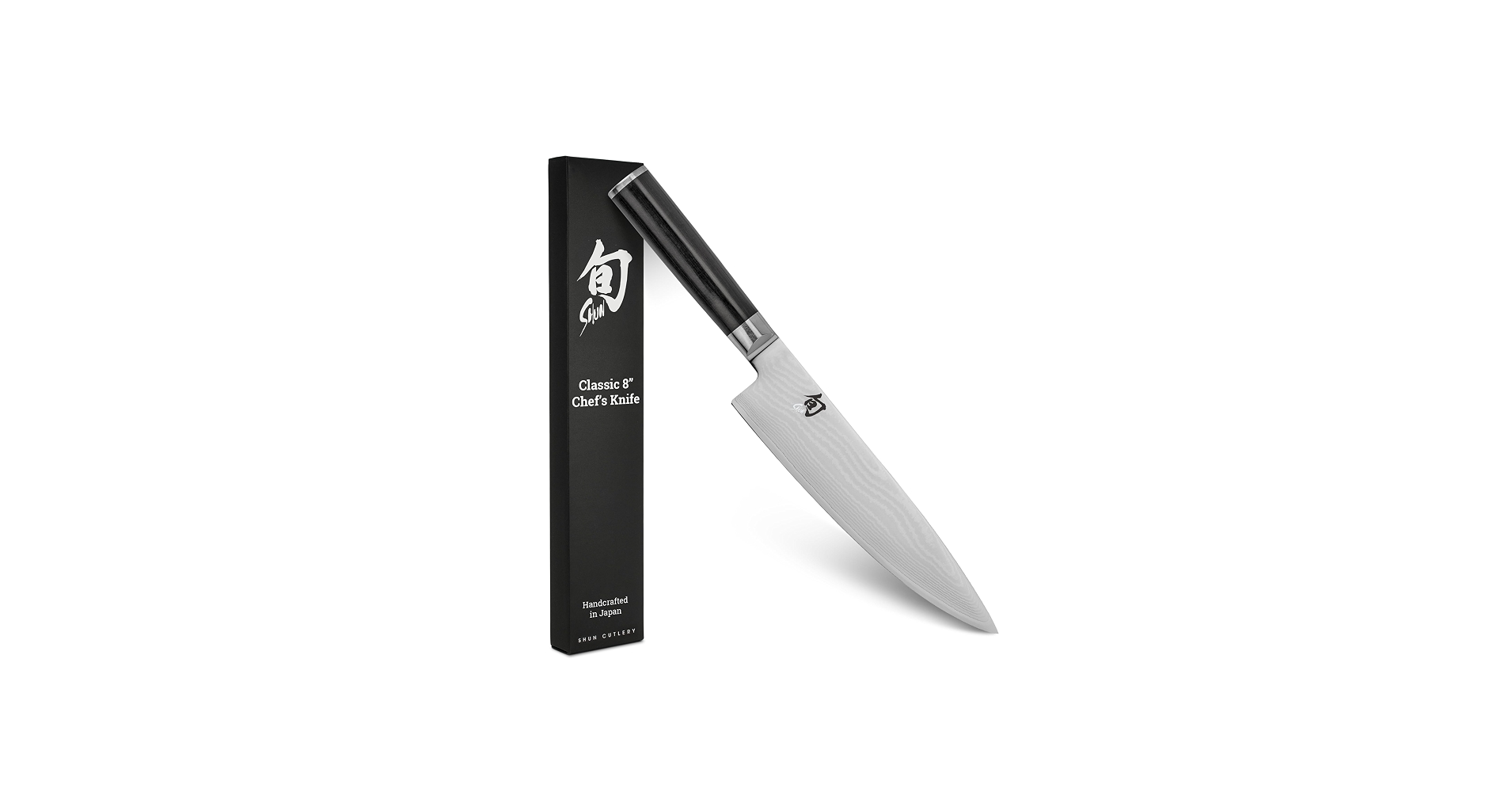
| Shun Classic Gyuto | Genuine Damascus cladding (VG-MAX core) | Seki, Japan | $165–250 | Balance of authenticity, looks, and accessibility |
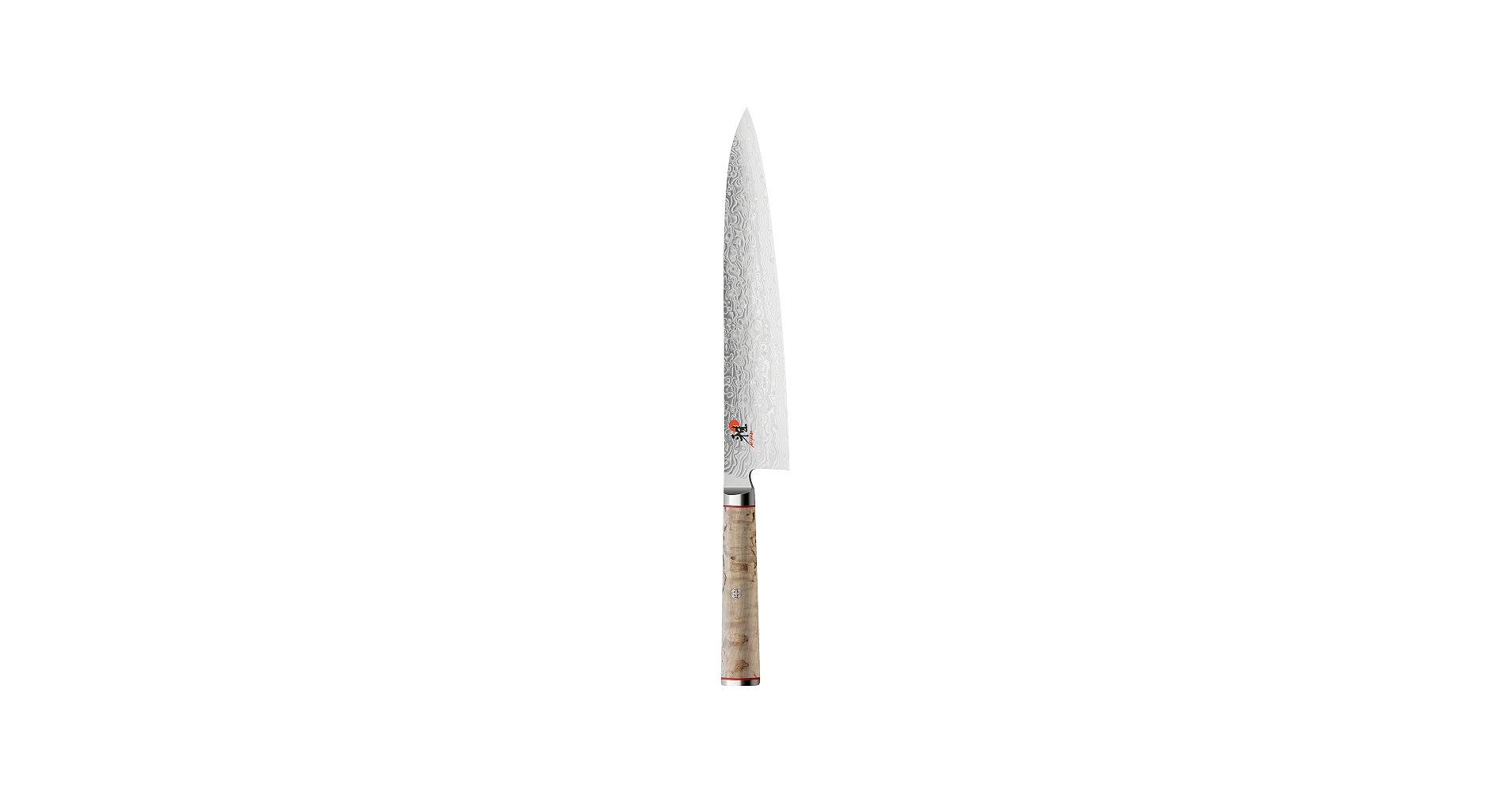
| Miyabi Birchwood 5000MCD | Genuine hammered Damascus (proprietary core) | Seki, Japan | $315–440 | Maximum visual impact |
| Sakai Kikumori Gyuto | Traditional hand-forged, hammer-textured | Sakai, Japan | $150–300 (varies by line) | Authentic hand-forged provenance |
| JIKKO Gyuto/Santoku Set | Traditional hand-forged, since 1901 | Sakai, Japan | $180–350 (varies by line) | Oldest continuously-operating Sakai maker on this list |
Individual reviews
Shun Classic Gyuto
Shun’s Damascus cladding is genuine layered construction, not a printed effect, and it’s manufactured in Seki — Japan’s other major blade-forging region alongside Sakai. It’s the most accessible entry point into real Damascus construction without stepping into hand-forged pricing.
Pros:
- Genuine layered construction, not surface printing
- Manufactured in Seki, a legitimate Japanese forging region
- Widely available with consistent quality control
Cons:
- Machine-manufactured rather than hand-forged
- Pattern is attractive but more uniform than hand-hammered work
- Requires prompt drying like any textured blade

Miyabi Birchwood 5000MCD
If the goal is maximum visual drama, the Birchwood’s hammered Damascus finish is hard to beat — the texture is deep and photographs beautifully, and the birchwood handle adds another layer of craft appearance.
Pros:
- Among the most visually striking patterns available at retail
- Genuine hammered construction, not surface effect
- Performs at a genuinely premium level, not just decorative
Cons:
- Highest price point in this comparison
- Textured surface needs diligent drying
- Birchwood handle needs more care than synthetic alternatives

Sakai Kikumori Gyuto
For buyers who want the pattern to come from an unambiguously traditional source, Sakai Kikumori — a Sakai workshop tracing back to 1926 — offers hand-forged construction from a region historically central to Japanese blade-making, with individual craftsmen credited by name.
Pros:
- Genuine hand-forged heritage from a historic blade-making region
- Individual craftsman attribution, not anonymous factory output
- Wide range of lines and price points
Cons:
- Less standardized than mass-manufactured alternatives
- Pattern may be more subtle than heavily marketed “wow factor” Damascus
- Sourcing the exact right line takes more research


JIKKO Gyuto/Santoku Set
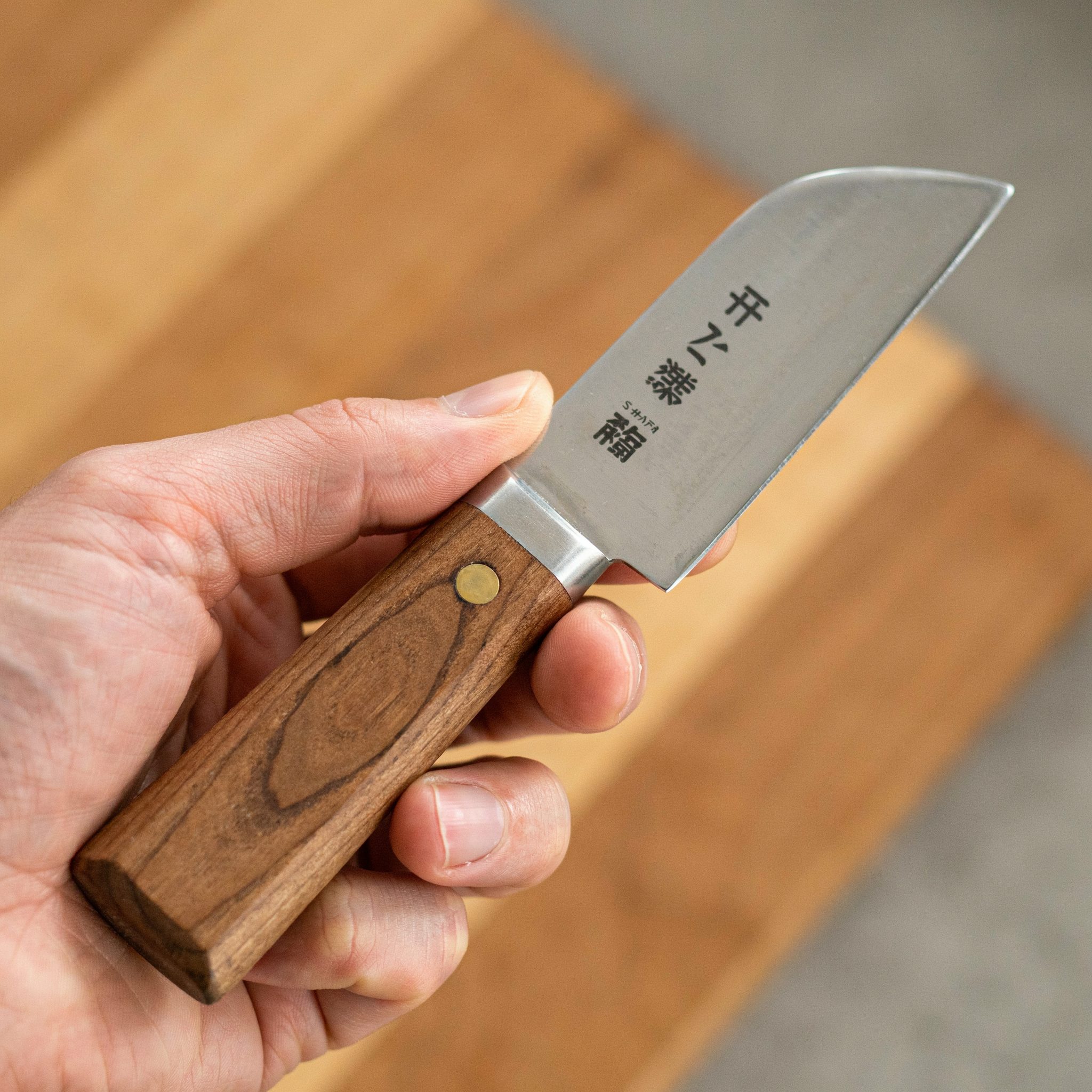
JIKKO (實光) has been forging knives in Sakai since 1901, making it one of the longest continuously-operating workshops in the region. Their knives lean toward a more understated, functional aesthetic than some Damascus-forward brands — the pattern is a byproduct of genuine construction rather than the main selling point.
Pros:
- Over a century of continuous Sakai craftsmanship
- Functional, no-nonsense construction philosophy
- Genuine hand-forged and hand-finished blades
Cons:
- Less dramatic Damascus patterning than brands that emphasize the visual
- Set options can be a larger upfront commitment than a single knife
- Line and steel choices require some research to match your needs

How a traditional blade actually comes together
For readers curious what “hand-forged” really involves, it’s a multi-stage process — far removed from a single machine stamping out a finished blade. Each stage — rough forging, repeated folding, edge grinding, polishing, and handle fitting — is traditionally handled with real specialization, which is part of why hand-forged knives carry a different price and character than factory-produced ones.
Recommendation by use case
- Want genuine Damascus construction at the most accessible price: Shun Classic Gyuto.
- Want the most visually striking pattern money can buy: Miyabi Birchwood 5000MCD.
- Want the pattern to come from an unambiguous hand-forged tradition: Sakai Kikumori Gyuto.
- Want the longest unbroken track record from a single Sakai workshop: JIKKO Gyuto/Santoku Set, forging in Sakai since 1901.
- Mainly want to post it on Instagram and don’t mind a lighter wallet hit: Shun Classic is the practical sweet spot.
Conclusion
The wavy pattern that makes these knives so shareable isn’t just decoration when it’s done right — it’s the visible signature of genuine layered or hand-forged construction, tracing back to real Japanese blade-making regions. In my experience, once you know what you’re looking at, it becomes easy to tell a knife built for the craft from one built purely for a product photo.
Ready to see it in person? Compare current pricing on the Shun Classic Gyuto, Miyabi Birchwood 5000MCD, Sakai Kikumori Gyuto, and JIKKO Gyuto/Santoku Set. Curious about the historic region behind hand-forged options like Sakai Kikumori and JIKKO? See our Sakai vs Seki comparison.
コメント